 Skip to main content
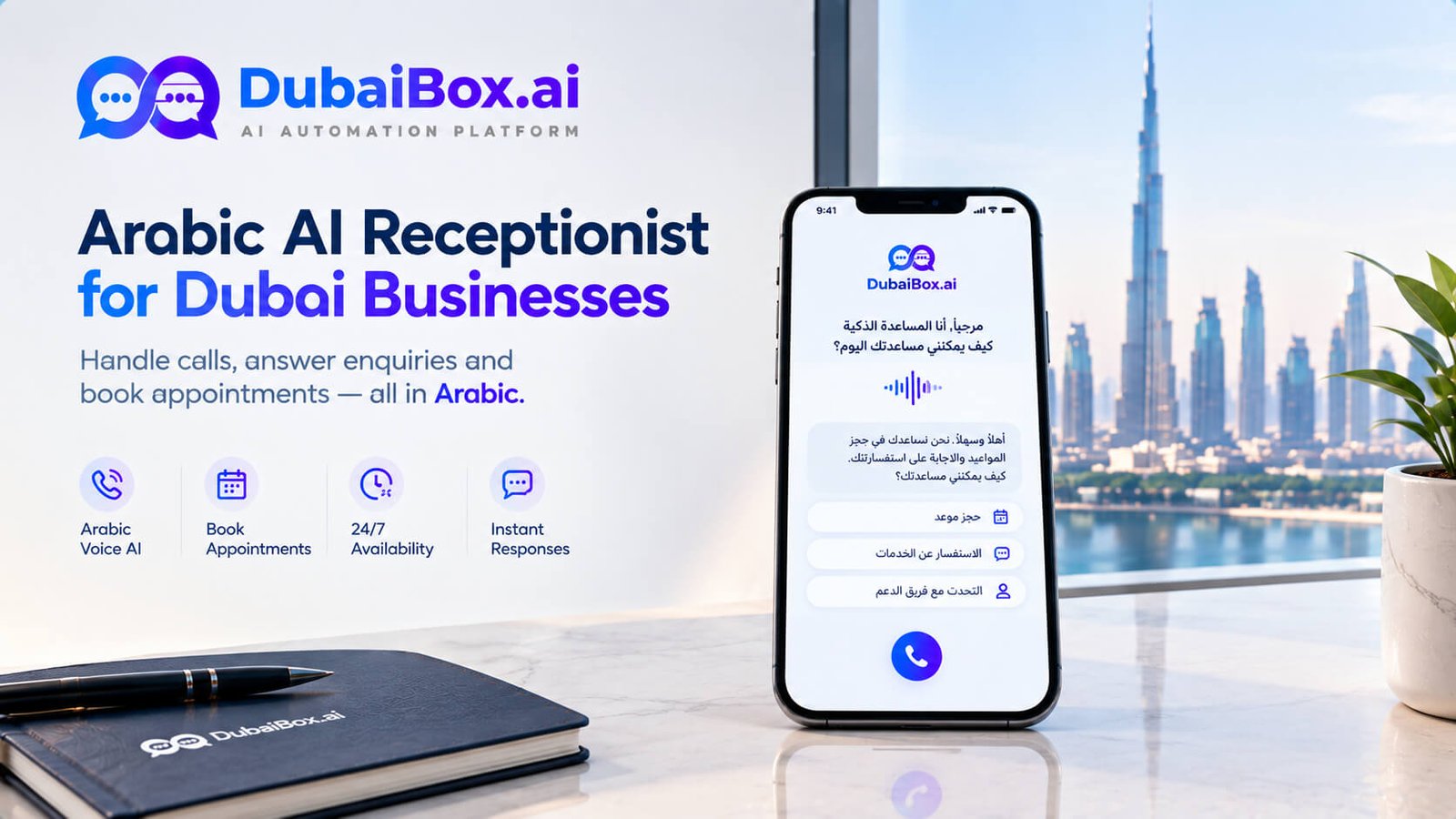
A caller phones a Dubai business, opens in Arabic, and gets back a response that sounds like it was read off a script translated the night before. Wrong rhythm, overly formal phrasing, none of the natural back and forth a real bilingual receptionist would have. The caller either switches to English out of frustration or just hangs up and calls somewhere else. This is exactly the gap between a system that technically “supports Arabic” and one that’s genuinely built as an arabic ai receptionist dubai solution.
This article covers what fluent actually means in this context, why the difference matters so much on a phone call specifically, and what to check before choosing a provider.
Why Phone Calls Are A Harder Test Than Text
Arabic chatbot support gets discussed a lot, but voice is a genuinely harder problem, and the gap between a mediocre and a great system shows up much faster on a call than in a chat window. Speech carries accent, dialect, tone, and pacing in ways that text simply doesn’t, and a voice system built primarily for English with Arabic bolted on afterward tends to struggle noticeably, mishearing words, responding stiffly, or defaulting back to English the moment it gets confused.
For a caller, this isn’t a minor inconvenience, it’s an immediate signal that they’re dealing with something not really built for them, and that impression forms within the first few seconds of the call.
What Genuine Fluency Actually Involves
A properly built Arabic AI receptionist handles a caller’s opening language naturally, whether they start in Gulf dialect, Egyptian Arabic, Modern Standard Arabic, or a casual mix of Arabic and English, which is extremely common in everyday UAE phone conversation. It follows the caller’s lead rather than forcing them into one rigid script or dialect.
It also handles code switching mid call gracefully, since a caller might start a sentence in Arabic and finish it in English, or shift entirely partway through the conversation, and a genuinely fluent system follows that shift without breaking character or defaulting back to a generic response. And it uses natural pacing and phrasing rather than the stiff, overly formal tone that comes from a system built around literal translation rather than genuine bilingual conversation design.
Generic Translation Layer Versus Genuinely Fluent System
The difference between the two approaches is easiest to see side by side.
What To Check | Generic Translation Layer | Genuinely Fluent System |
|---|---|---|
Dialect handling | Locked into one formal register | Follows Gulf, Egyptian, or MSA naturally |
Code switching mid call | Gets confused or defaults to English | Follows the caller’s shift smoothly |
Tone and pacing | Stiff, overly formal, translated feel | Natural, conversational rhythm |
Booking and transactional tasks | Often reduced functionality in Arabic | Same full functionality as English |
Built for voice specifically | Usually adapted from a text based bot | Designed for spoken conversation from the start |
Why This Table Matters For A Buying Decision
Most sales conversations with a provider focus on the pitch rather than this kind of side by side comparison, which is exactly why it’s worth asking to see, or better yet hear, where a specific system actually lands on each of these points before committing to anything.
How This Actually Plays Out On A Real Call
The Opening Moment
A caller opens the conversation in Arabic, and the system responds in kind immediately, without an awkward pause or a default English greeting first.
If the caller asks a question in a specific dialect or with regional phrasing, the system understands the intent rather than getting stuck on unfamiliar exact wording.
Handling The Actual Request
For transactional requests, booking an appointment, confirming pricing, checking hours, the system handles the task the same way it would in English, without a noticeably reduced or clunkier experience just because the conversation happens to be in Arabic.
If the caller switches languages mid call, which happens constantly in genuine UAE conversation, the system follows naturally rather than getting confused or forcing the caller back into one language.
Why This Matters More For A Receptionist Than A Chatbot
A chatbot conversation happens at the customer’s own pace, they can reread a response, take time to type, correct a message if needed. A phone call happens in real time, with no room to pause and reread, which means any stiffness or confusion in the system’s Arabic handling is far more noticeable and far more frustrating for the caller in the moment.
This is exactly why voice specifically deserves more scrutiny when evaluating Arabic capability, since a provider’s chatbot might handle Arabic reasonably well while their voice system, built on different underlying technology, performs noticeably worse.
What Businesses Actually Notice With A Properly Fluent System
Arabic speaking callers stay on the line rather than hanging up in frustration or demanding to switch to English immediately. Booking and enquiry completion rates on Arabic calls tend to close the gap with English calls once the experience genuinely feels equally smooth on both sides.
There’s also a trust signal that’s easy to underestimate. A business whose phone system handles Arabic naturally signals genuine investment in serving the local market properly, rather than treating Arabic support as an afterthought. Callers notice this difference even when they can’t always articulate exactly why one system felt more natural than another.
This kind of capability usually sits within a broader AI automation services in Dubai setup, where Arabic quality stays consistent across phone, WhatsApp, and chat rather than being strong on one channel and weak on another.
Where This Matters Most
Healthcare And Clinics
Clinics and healthcare providers benefit enormously, since patients often feel more comfortable describing symptoms or understanding instructions in their first language, and a natural Arabic conversation on the phone can genuinely affect how clearly that communication happens.
Real Estate And Retail
Real estate brokerages handling a mix of local and international Arabic speaking clients need a system that handles both formal and casual registers naturally, since a serious property enquiry deserves a different tone than a quick availability check.
Retail and hospitality businesses see strong value too, since a large share of walk in and phone enquiries naturally default to Arabic, particularly from older or more traditional customers less comfortable navigating an English only system.
An AI receptionist for Dubai businesses built with genuine bilingual voice capability from the ground up is usually the right starting point, rather than a system where Arabic was added on as a secondary feature.
What To Check Before Choosing A Provider
It’s worth testing a voice system in Arabic directly rather than trusting a general claim of support, ideally with someone who speaks the language fluently reviewing the actual call quality. Try mixing dialects or switching languages mid call and see how naturally it follows. And ask specifically whether the voice system was built for Arabic from the start or added as a secondary layer afterward, since that architectural difference genuinely shows up in call quality.
Frequently Asked Questions
A well built system follows the caller's own dialect and phrasing rather than forcing everyone into one formal register, adapting to Gulf, Egyptian, or Modern Standard Arabic as needed.
A properly built system follows that shift naturally, responding appropriately without getting confused or defaulting back to English.
Not always. Voice is a genuinely harder technical problem, so it's worth testing the actual phone system specifically rather than assuming chatbot quality carries over automatically.
Not inherently more expensive, but it does require a provider genuinely invested in bilingual voice quality rather than treating Arabic as a checkbox feature.
Yes, properly configured systems escalate cleanly to a human team member when something falls outside the system's scope, in either language.
Hear It Handle A Real Arabic Call
The clearest way to judge voice quality is to hear it directly. Book a Free Demo with Dubai Box Ai and listen to how it handles a real call in Arabic, English, or a natural mix of both.
Contact & Booking Details
Call: +971 58 258 5138
WhatsApp: +971 58 258 5138
Email: hi@dubaibox.ai
Address: Office 1607, Empire Heights A, Business Bay, Dubai, UAE
Related Post
- October 12, 2026
AI Appointment Reminder Calls: Cut Dubai Clinic No-Shows
- October 10, 2026
WhatsApp Automation vs Chatbot: What Is the Difference?
- October 9, 2026
